



January 2026
The Best Personalized Learning Doesn’t Look Like EdTech at All
Beyond buzzwords, explore how personalized learning really works in 2026 and what it means for teachers, students, and classrooms.
If you're worried about your child spending more time on screens or worried that technology is replacing real teaching, I understand completely. I work at an education technology company, and those concerns keep me up at night, too.
I hear from parents all the time who remember "personalized learning" being promised before. Maybe it meant kids stuck on tablets in the corner. Perhaps it meant teachers handing over control to algorithms. Maybe it just meant more screen time and less human connection.
So let me be honest about what I see in 2026, from someone who builds these tools but also worries constantly about getting it wrong.
What This Is Not
Before I tell you what personalized learning looks like now, here's what it isn't.
It's not children sitting isolated at computers all day. It's not algorithms making decisions about what your child should learn. It's not teachers being replaced or sidelined. And it's not eliminating the social, human parts of education that matter most.
When personalized learning goes wrong, it looks like all of those things. I've seen bad implementations. They exist. But that's not what I'm describing here.
It Starts With the Teacher, Not the Software
Here's what actually happens in a classroom using personalized learning well.
A teacher notices that one student flies through reading but slows down in math. Another student learns best by watching and rewatching short videos instead of reading long passages. A third student missed a key concept last week and is now stuck.
Ten years ago, teachers knew much of this through instinct, but acting on that knowledge for 30 individuals simultaneously was nearly impossible. Today, technology quietly surfaces these patterns. Not to replace the teacher's judgment, but to give them one less thing to track manually.
The teacher still makes every important decision. The technology just makes those decisions clearer and faster.
Students Move at Different Speeds, and That's Okay
If you haven't been in a classroom recently, this part might surprise you. In 2026, students sitting next to each other often work on different versions of the same lesson.
One student might be reviewing a concept they missed yesterday. Another might be applying that same concept to a real-world problem. A third might be ready to move ahead.
This isn't chaos. It's not tracking or labeling kids as "behind" or "ahead." It's responding to where each student actually is right now.
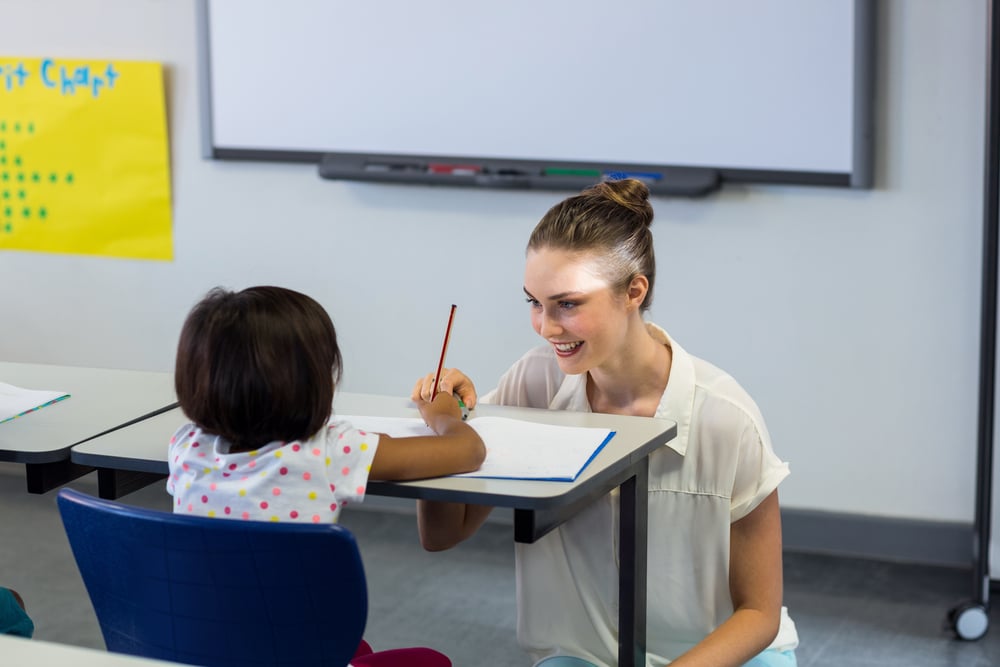
And here's the part that matters most: this happens with teacher guidance, not instead of it. The teacher is moving around the room, checking in, having conversations, noticing who's engaged and who's lost. Technology helps manage the flow, but the teacher is still teaching.
What About Screen Time?
This is the question I hear most from parents. Fair question.
In a well-designed personalized learning environment, technology is one tool among many. Students aren't on devices all day. They're reading physical books. They're working in groups. They're writing on paper. They're having discussions.
When they are on a device, it's usually for a specific reason. Practicing a skill they need more work on. Getting immediate feedback on a problem. Watching a short explanation, they can pause and rewind.
The goal isn't more screen time. The goal is better use of time, period.
Teachers Have More Time for What Matters
From the outside, it's easy to assume that more technology means more work for teachers, or that teachers are being pushed aside. In reality, the best personalized learning environments do the opposite.
Routine tasks are increasingly automated. Grading simple checks for understanding. Organizing materials. Translating content for multilingual families. These things still happen, but they don't eat up hours of a teacher's evening anymore.
That gives teachers something they've always needed more of: time. More time to talk to students on one. More time to notice when someone is disengaged or struggling emotionally. More time to adjust lessons based on what's actually happening in the room, not what the pacing guide says should be happening.
When I visit classrooms, the teachers using these tools well aren't the ones buried in dashboards. They're the ones walking around, making eye contact, asking questions, and teaching.
Your Child Has More Say in Their Learning
One of the biggest shifts I've seen is how students see themselves as learners. Personalized learning in 2026 isn't something done to them. It's something they participate in.
Students can see their own progress more clearly. They understand what they're working toward and why. Many are given choices in how they show what they know, whether through writing, video, projects, or presentations.
Does this work for every student? No. Some students need more structure. Some prefer being told exactly what to do. Good personalized learning makes room for that, too.
When Technology Disappears, That's When It's Working
Here's the truth from someone inside an edtech company. When personalized learning works, you almost forget the technology is there.
Last month, I watched a fifth-grade classroom where students were working through fraction problems at their own pace. Some used an app that gave instant feedback. Others worked through problems on paper and checked in with the teacher. Two students were at the board explaining their thinking to each other.
The teacher moved between groups, asking questions, correcting misconceptions, and celebrating breakthroughs. At no point did anyone mention the platform. No one was troubleshooting login issues or waiting for the app to load. The technology had become invisible, and what remained was just learning.
That's what we're aiming for. When it works, students aren't thinking about the platform. Teachers aren't thinking about the tool. Parents aren't hearing complaints about confusing apps or lost passwords. Everyone is thinking about learning.
What You Can Do as a Parent
If your child's school is moving toward personalized learning, you don't have to be excited about it. But I hope you'll stay curious.
Let go of comparison. When students move at different speeds, it's tempting to worry that your child is behind. In personalized learning environments, different doesn't mean failing. It usually means the system is responding to what your child needs right now.
Focus on learning, not just results. Instead of asking only about grades or scores, try asking "What are you working on this week?" or "What felt challenging today?" These conversations help your child reflect and feel supported rather than just evaluated.
Ask questions when something feels off. If your child is frustrated, spending too much time on screens, or the technology seems to be getting in the way, talk to the teacher. Good personalized learning should be flexible enough to adjust.
And most importantly, visit the classroom if you can. Talk to your child's teacher about how it's actually working, not just how it's supposed to work.
The Uncomfortable Truth
Personalized learning isn't perfect. Some schools implement it badly. Some tools are poorly designed. Some teachers are forced to use technology they don't believe in or weren't trained on.
And sometimes, the old way of teaching works better for certain students, certain subjects, certain moments.
I say this as someone who works in this field: you're right to be skeptical. The education technology industry has overpromised before. We've sold products that didn't deliver. We've used buzzwords to hide the fact that we didn't fully understand classrooms.
But I also see something different happening now. Not everywhere, and not perfectly, but in enough places to make me believe this approach can work when it's done with care.
What I'm Watching For
As both an insider building these tools and a person trying to understand what school feels like for students today, I'm watching for a few things.
Are teachers staying in the profession longer because they feel supported, not overwhelmed? Are students more engaged, not just compliant? Are parents feeling informed and included, not shut out by jargon and platforms they don't understand?
Those are the measures that matter. Not the features we build or the data we collect, but whether learning feels more human, not less.
Moving Forward
In 2026, personalized learning should bring education closer to what it has always been intended to be: meeting learners where they are, respecting them as individuals, and helping them grow. When it does that, the technology matters less than the relationships it makes possible.
And when it doesn't do that, we need to hear about it so we can do better.
If something feels wrong, speak up. The best implementations happen when parents, teachers, and students are all part of the conversation, not just the people building the technology.