



March 2026
When Learning Has No Classroom
When classrooms aren’t an option, learning doesn’t stop. See how edtech and AI are bridging gaps in global education.
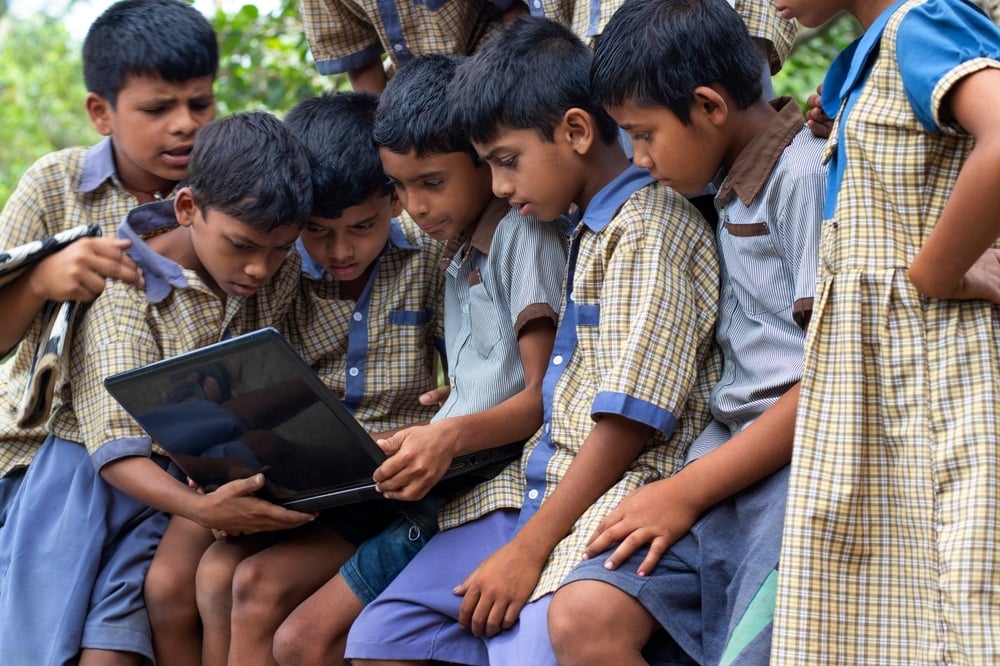
I've been thinking a lot about what we mean when we say "education for all."
Because when most of us picture a learning environment, we picture certain things. A classroom. A teacher at the front. Students with notebooks. Maybe computers. Definitely electricity and internet.
For millions of children, that picture doesn't match their reality.
Not because they don't want to learn. Not because their communities don't value education. But because the infrastructure we take for granted simply isn't there.
And if we're serious about reaching every learner, we need to design for the world as it actually is, not as we wish it were.
The Gap Between Promise and Reality
Education is called a universal right. But access to it remains deeply unequal.
Some students grow up with libraries, tutors, high-speed internet, and well-resourced schools. Others grow up in refugee camps, remote villages, or areas where conflict has destroyed infrastructure. Where the nearest school is hours away. Where teachers are overworked and underpaid, managing classrooms of 60 or more students. Where electricity comes and goes.
These aren't edge cases. They're the reality for hundreds of millions of children.
The question isn't whether these students deserve quality education. Of course they do. The question is how we deliver it when traditional systems can't reach them.
Progress Doesn't Require Perfection
One thing I've learned from educators working in challenging contexts is this: waiting for ideal conditions means waiting forever.
Yes, every child deserves a fully resourced school. But while we work toward that long-term goal, we can't let perfect be the enemy of good.
This is where thoughtful edtech becomes powerful.
A solar-powered tablet loaded with offline lessons can serve an entire village. A low-bandwidth platform can deliver quality content over a spotty connection. Audio lessons can teach literacy even when screens aren't available. One smartphone shared among students can open doors that were previously closed.
Will this look the same as a well-funded suburban school? No. But it's something. And something is infinitely better than nothing.
The real innovation isn't in the technology itself. It's in the creativity of educators and communities who figure out how to make it work with what they have.
What AI Actually Offers (Without the Hype)
When people talk about AI in education, it often sounds either utopian or dystopian.
The reality is more mundane and more useful.
AI can help a teacher in a classroom of 80 students identify which learners are falling behind in specific skills. It can translate lessons into local languages that don't have many educational resources. It can provide personalized practice problems so students can progress at their own pace. It can turn a recording of a master teacher into an interactive learning experience that can be reused hundreds of times.
This isn't about replacing human educators. It's about extending their reach when there simply aren't enough of them to go around.
And no, this doesn't require expensive hardware. Some of the most effective applications run on basic smartphones or even work through SMS. The goal isn't to be cutting-edge. It's to be accessible.
Meeting Communities Where They Are
I want to share what this looks like in practice.
In Kenya, the M-Shule platform uses SMS and basic phones to deliver personalized lessons, reaching students who have no internet access. In India, organizations like Pratham use simple tablets with offline content to bring foundational literacy and numeracy to children in low-income communities. In refugee camps, programs like Kakuma's Instant Network Schools use satellite internet and shared devices to connect displaced students with accredited curricula.
These aren't theoretical solutions. They're working right now.
What they have in common is that they started by listening to communities, understanding real constraints (cost, connectivity, language, cultural context), and building from there. Not imposing solutions, but co-creating them.
Why This Matters Beyond Test Scores
When a child in a remote area gets access to learning, something shifts.
Yes, they gain knowledge and skills. But it's more than that.
Consistent access to education, even if imperfect, keeps curiosity alive during difficult times. It prevents the loss of foundational skills that happens when schooling is interrupted. It tells young people that their future still matters, that learning is still possible, that they haven't been forgotten.
Education preserves dignity. It creates pathways where none existed. It reminds children of their own potential.
That's the impact that matters most.
What ryco Is Building
At ryco, we're working to make learning truly portable and practical.
We're building flexible learning experiences that work across contexts: online when connectivity allows, offline when it doesn't. Our platform adapts to different devices, bandwidths, and learning environments. We partner with local educators to ensure content is culturally relevant and linguistically accessible.
We're not trying to replace traditional schools. We're trying to support learning wherever it needs to happen: in homes, community centers, refugee camps, or anywhere else students gather.
Our goal is simple: if a learner has even minimal access to technology, they should be able to learn.
An Invitation, Not a Lecture
If you work in education, technology, or international development, you already know this matters.
You don't need me to tell you that millions of children lack access to quality learning. You've seen it. You've probably struggled with it.
What might help is thinking together about next steps:
Where could your work have more impact if you designed for limited resources first? What partnerships could extend your reach? What open-source tools or shared resources could you contribute to or benefit from?
For funders and organizations: consider supporting initiatives that prioritize reach over polish, that work with communities rather than for them, that measure impact by who gains access, not just by test scores.
For educators and designers: experiment with offline-first solutions. Build for low bandwidth. Design for shared devices. Test in the contexts where your work is needed most, not just where it's easiest.
Moving Forward
Global education won't transform overnight. The barriers are real and significant.
But every student who gains access to learning when they previously had none is a victory. Every community that finds a way to keep education alive during disruption is making progress. Every tool that works in difficult contexts opens possibilities.
We don't need perfect solutions. We need reachable ones.
And that's something we can build together, one student, one community, one creative solution at a time.
Education doesn't have to look the same everywhere. But it should be available everywhere.
That's the world worth working toward.